01
All Services
See the full service directory to compare renovation, repair, and trade-work options.
Explore pageTargeted repair of toilet and bathroom leaks in Singapore homes: bowl seals, cisterns, floor traps, concealed pipes and wet-area seepage, found and fixed without redoing the whole bathroom when it is not needed.
Bathroom leaks are hard to pin down because water travels along pipes, screed and slab before it shows, often as a stain in the unit below. We find which part has failed, repair that part, and test it, so you only pay for full re-waterproofing when the membrane itself is the problem.
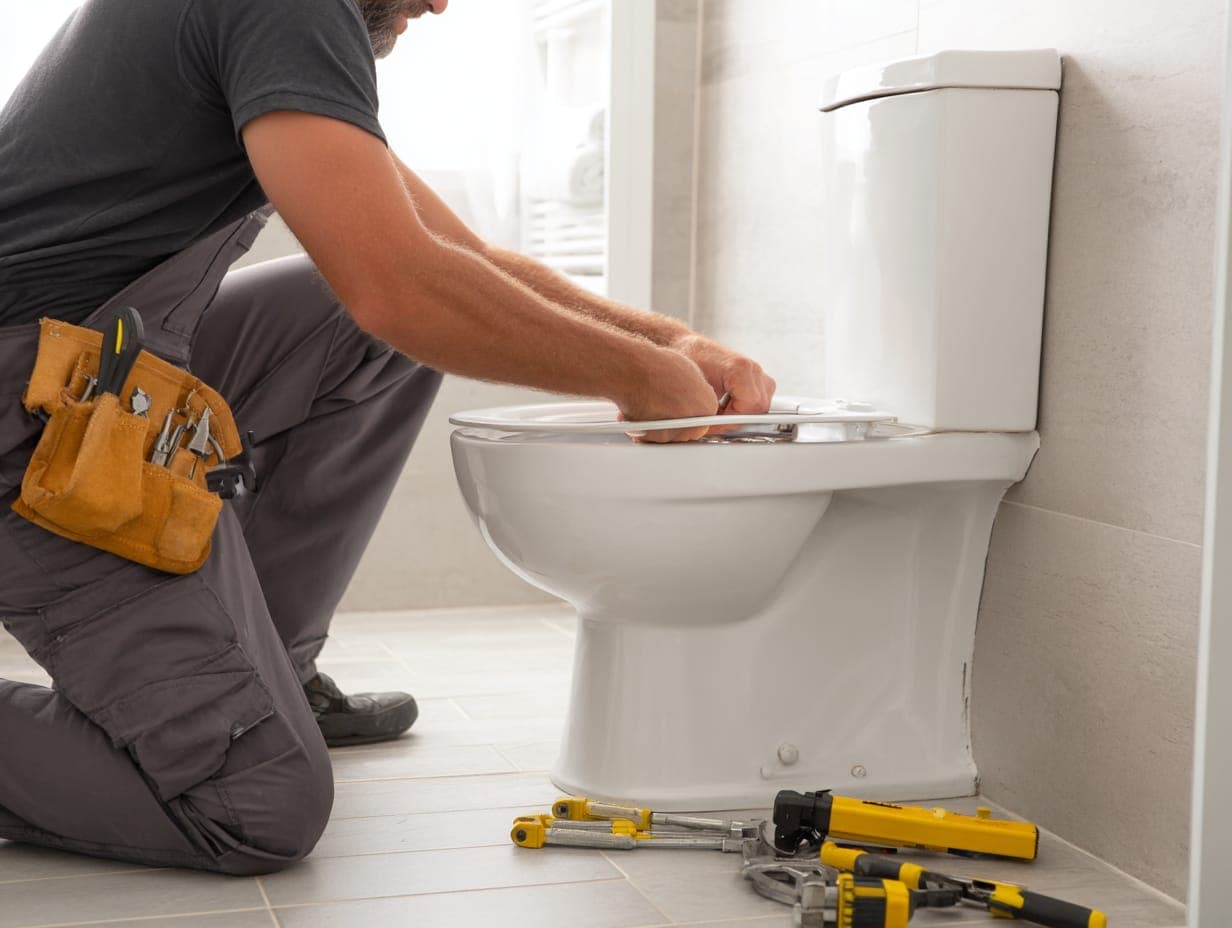
Replace failed wax ring or use modern sealing methods for toilet bowl to floor connection.
Fix or replace inlet valve, flush mechanism, and outlet connections.
Access and repair leaking concealed pipes behind walls or floors.
Fix leaking cisterns, overflow issues, and tank components.
Repair and seal floor trap connections and waste pipes.
Full toilet replacement when repair is not economical.
A bathroom has several parts that can leak, and each one gives itself away differently. Matching the symptom to the source is what keeps the repair small.
| Source | Clue | Typical repair |
|---|---|---|
| Toilet bowl seal or outlet | Water at the base of the bowl, or a stain below that appears after flushing | Remove the bowl, replace the seal or connector, refit and test |
| Cistern and inlet | Constant trickle into the bowl, damp behind the cistern, a running meter | Replace the inlet valve, flush mechanism or connector hose |
| Floor trap | Damp around the trap, stain directly below it | Reseal or replace the trap and repair the membrane around it |
| Concealed supply pipe | Wall or floor stays wet even when nobody has used the bathroom | Open at the leak, replace the section, pressure test, retile |
| Discharge pipe joint | Leak only when the basin, shower or toilet drains | Reseal or replace the joint, test with running water |
| Waterproofing membrane | Stain below after every shower over a wide area, damp walls next door | Full bathroom waterproofing with ponding test |
We ask when the leak appears, check moisture around the bathroom and the ceiling below, and test each part in turn: flushing, running the basin and shower, isolating the supply, and if needed a ponding test on the floor.
A bowl seal, cistern part, floor trap or pipe joint can usually be fixed with little or no hacking. We open the smallest area needed to reach a concealed pipe and match the tiles when we close it.
Supply pipes are pressure tested, drains are run, and floor repairs get a ponding test. The ceiling below is checked again before we call it done.
Once the source is fixed and the slab has dried, the stained ceiling below or the damp wall next door can be repaired. See ceiling repair for that stage, and our guide to wall leakage and water seepage if the damp has spread into a bedroom or corridor wall.
Grout sealers, silicone along tile edges and surface coatings are often sold as bathroom leakage treatment. They can slow water at the surface but do not repair a failed membrane underneath. If a bathroom has leaked from several places, is old, or keeps leaking after targeted repairs, re-waterproofing is usually cheaper in the long run than repeated patching.
Our toilet leakage warning signs guide helps you spot the problem early, and the leak repair cost guide explains what moves the price. For leaks elsewhere in the home, see water leakage repair.
Identify the exact source of leakage through systematic testing.
Recommend the most effective repair approach.
Prepare access to leak area (may require hacking if concealed).
Execute repair with quality materials and proper technique.
Flush test and leak check to verify repair success.
Restore any areas that were opened for access.
Base leaks are usually caused by a failed wax ring seal or cracked bowl. We can diagnose the exact cause and provide appropriate repair.
Flush-related leaks typically indicate issues with the bowl seal, outlet pipe connection, or cistern overflow. Diagnosis will pinpoint the cause.
Not always. Many toilet leaks can be repaired without replacement. We'll advise if replacement is more cost-effective than repair.
Simple repairs like seal replacement take 1-2 hours. Concealed pipe repairs requiring hacking may take 1-2 days.
Not always. If the leak comes from a pipe joint, floor trap or toilet seal, a targeted repair and a test may solve it. If water comes through across a wide area after every shower, the membrane has usually failed and the floor needs re-waterproofing.
Usually the owner of the unit where the leak starts repairs the source, and the lower unit repairs its own ceiling once the source is fixed. In HDB flats, ceiling leaks between two flats are generally treated as a shared matter for both owners to resolve together, so check HDB's current guidance.
Compare this service with related options, review our process, browse recent work, or reach out for a quotation.
See the full service directory to compare renovation, repair, and trade-work options.
Explore pageUnderstand our consultation, planning, build, and handover process before you enquire.
Explore pageBrowse completed project photos and videos across residential and commercial spaces.
Explore pageTell us about your project and get a clear recommendation with transparent pricing.
Explore pageTell us about your space and we'll respond with a clear plan and a transparent quote.