On this page (10 sections)
- Signs of water seepage in a wall
- What causes wall leakage in Singapore homes
- Condensation or seepage? How to tell
- Water seepage repair methods
- The repair process, step by step
- Who is responsible: you, your neighbour or the MCST?
- How long wall leakage repair takes
- What not to do
- Frequently asked questions
- Bottom line
Wall leakage repair in Singapore starts with one question: where is the water getting into the wall? In most homes it comes from one of four places: a bathroom or kitchen on the other side, a concealed pipe inside the wall, rain getting through an external wall or window frame, or water running down from the unit above. Fix that source first, let the wall dry, then repair the plaster and paint. Painting over a damp wall without fixing the source is the most common reason water seepage comes back.
This guide covers the causes, how to tell seepage from condensation, the main water seepage repair methods, and who is responsible when the water is not coming from your side. If you would rather have the source traced and fixed for you, see our water leakage repair service.
Signs of water seepage in a wall
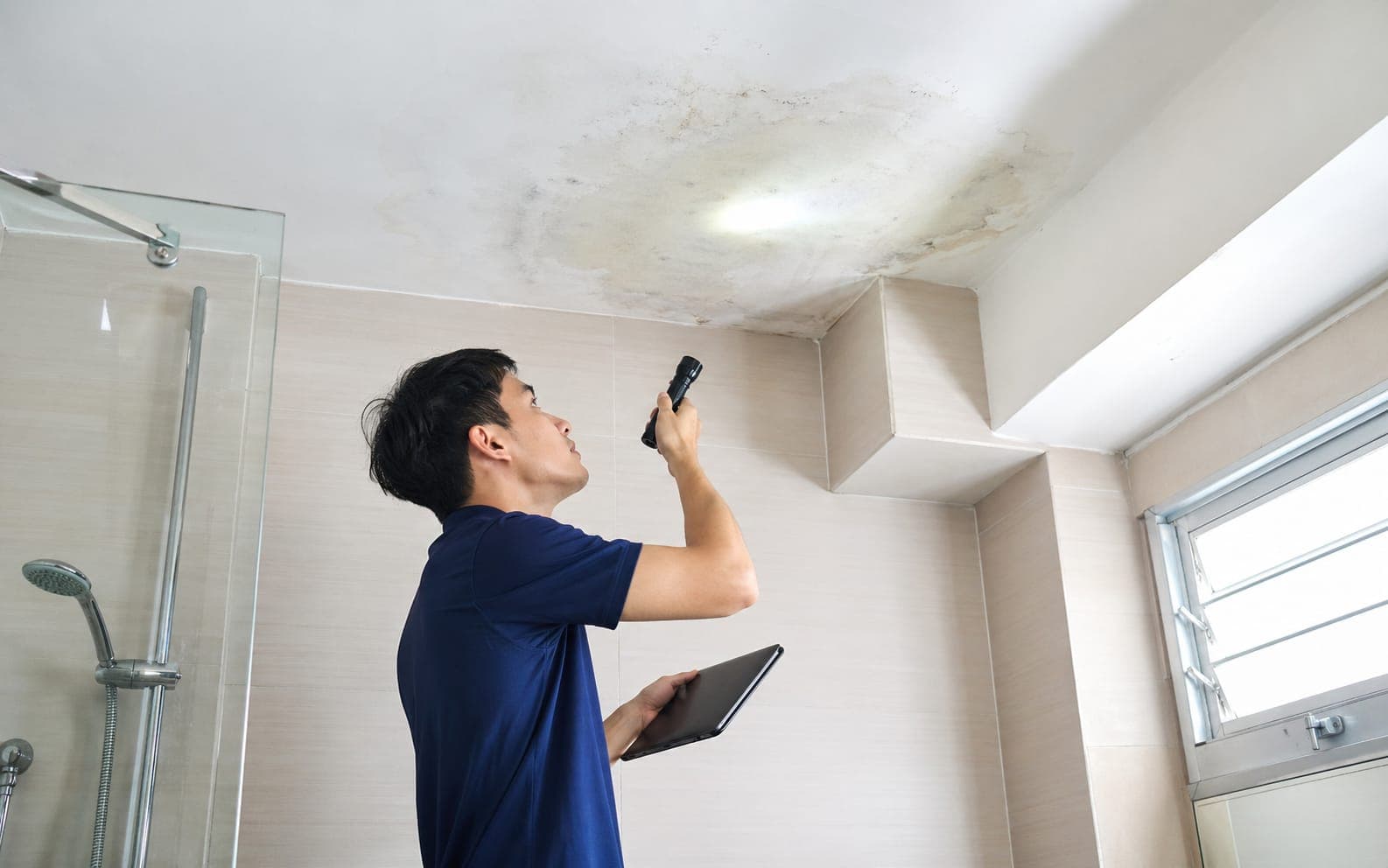
Seepage usually shows before you see any actual water:
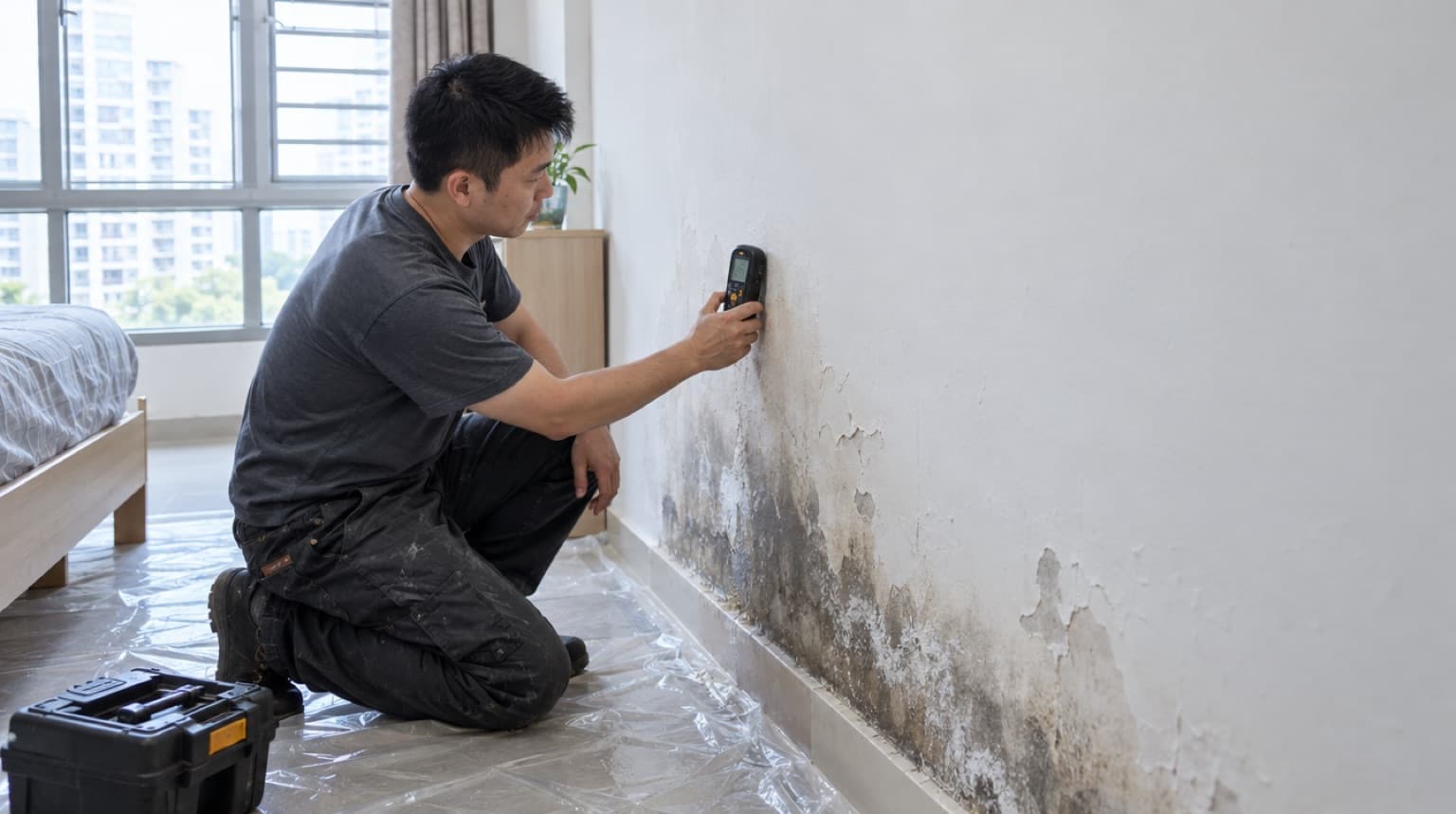
- Paint that bubbles, blisters or peels, often starting just above the skirting
- Dark or yellow-brown damp patches that grow after showers or rain
- White, powdery salt deposits (efflorescence) on the plaster
- Mould spots or a musty smell in one corner of a room
- Skirting, wardrobe backs or door frames that swell or rot
- Plaster that sounds hollow or crumbles when pressed
The position of the damp matters. Damp low on a wall that backs onto a bathroom suggests a wet-area or pipe problem. Damp high on an outside-facing wall, or around a window, suggests rain.
What causes wall leakage in Singapore homes
A bathroom or kitchen on the other side
This is the most common cause in HDB flats and condos. When the waterproofing at the wall-floor junction of a bathroom fails, or the membrane was never taken high enough up the wall, shower water soaks into the wall and wicks into the room next door. Damp that appears after showers, on a wall shared with a bathroom, points here. The fix is usually on the bathroom side: see bathroom and toilet waterproofing, or toilet leakage repair if the problem is around the toilet bowl, floor trap or concealed pipes.
A concealed pipe inside the wall
Supply pipes run inside many walls, especially in kitchens and bathrooms. A corroded pipe or a failed joint keeps the wall wet whether or not anyone is using water, because the pipe is under pressure. A simple check: turn off every tap and watch the water meter. If it still moves, water is escaping somewhere.
Rain through an external wall
Hairline cracks in external plaster, failed joints between materials, and badly detailed aircon ledges or parapets let wind-driven rain into the wall. The giveaway is damp on an outside-facing wall that gets worse after heavy rain and dries out in a dry spell.
Window frames
Old sealant around aluminium windows shrinks and cracks. Water gets behind the frame and runs down inside the wall, so the stain often appears below a window corner rather than at the frame itself.
Aircon drain pipes and condensation
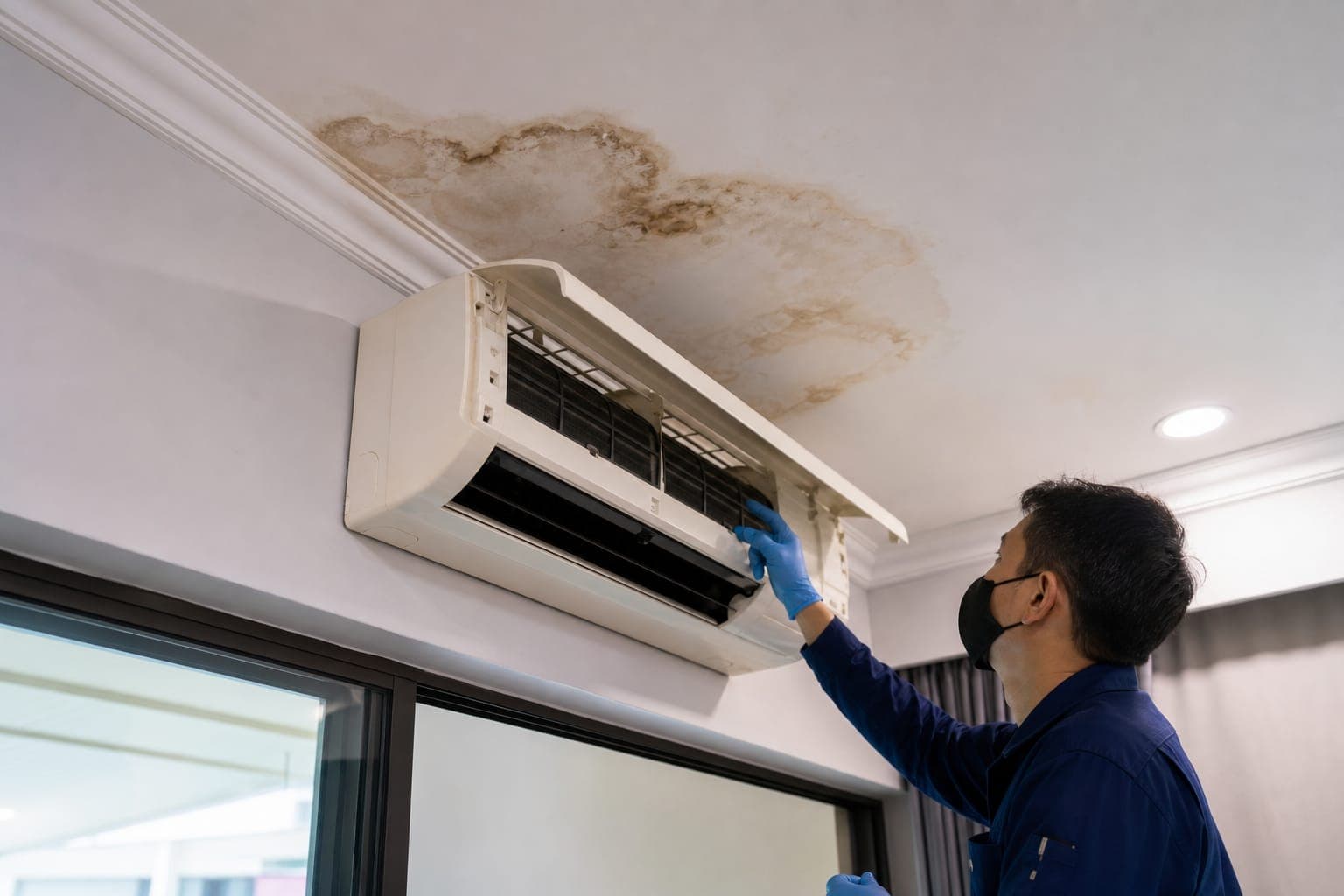
A blocked or poorly jointed aircon condensate pipe can leak inside a wall or false ceiling. Cold aircon pipes without proper insulation also drip condensation. Our guide to aircon leaks and condensation covers this in detail.
Water from above or below
Water from the unit above can run down inside a wall before it shows. At floor level, a leaking floor trap, balcony or planter box next to the wall can wick water up into the plaster.
Condensation or seepage? How to tell
Singapore's humidity means condensation is common, and it is often mistaken for a leak. The two need completely different fixes.
| Clue | Condensation | Seepage |
|---|---|---|
| Where | Cold surfaces: walls next to aircon, behind wardrobes, around aircon pipes | Walls next to wet areas, outside walls, below windows, near pipes |
| When | When the aircon runs, or on humid nights in closed rooms | After showers, after rain, or all the time for a pipe leak |
| Look | Fine droplets or general dampness, often with surface mould | Spreading stains, tide marks, bubbling paint, white salt deposits |
| Plaster | Usually sound | Often soft, hollow or crumbling |
| Fix | Ventilation, insulation on pipes, less temperature difference | Find and repair the water source, then repair the wall |
A quick home test: tape a square of plastic film or kitchen foil tightly over the damp patch and leave it for a day or two. If moisture forms on the room side of the film, it is condensation. If the wall under the film is wet, water is coming through the wall.
Water seepage repair methods
Each method suits a particular cause. The right water seepage repair method is the one that stops water at its source; the others only treat the surface.
| Method | When it is used | What it involves |
|---|---|---|
| Plumbing repair | Concealed pipe leak | Open the wall at the leak, replace the faulty section or joint, pressure test, replaster |
| Re-waterproofing the wet area | Bathroom or kitchen on the other side | Repair or replace the membrane at the floor and wall, ponding test, retile |
| Injection | Water passing through cracks or joints in concrete | Resin or grout injected into the crack to close the water path |
| Waterproof coating | Damp walls once the source is controlled, or walls exposed to rain | A cementitious or similar waterproof coating applied before plaster and paint |
| External wall sealing | Rain through cracks or joints outside | Cracks opened and filled from outside, joints resealed, external waterproof coating applied |
| Window resealing | Leaks around window frames | Old sealant removed, frame gaps packed and resealed, weep holes cleared |
A note on interior-side coatings: applying a waterproof coating on the inside face of a wall can hold back some dampness, but if the source is still feeding water into the wall, the moisture tends to show up somewhere else. Use it as part of a repair, not instead of one.
The repair process, step by step
- Document it. Take dated photos and note when the damp gets worse: after showers, after rain, or all the time.
- Trace the source. Moisture readings, a pressure test on pipes, a ponding test on the neighbouring wet area or a water spray test on windows, depending on the suspected cause.
- Fix the source. Pipe, waterproofing, external wall or window, as diagnosed.
- Let the wall dry. Wet masonry can take days to weeks to dry. Moisture readings tell you when it is ready.
- Remove damaged plaster. Blown, salty or crumbling plaster is hacked back to sound material.
- Treat and seal. Apply a waterproof coating where needed and treat any mould.
- Replaster and paint. Use a breathable paint system so any remaining moisture can escape.
- Check again. Look at the wall after a few heavy showers or storms before you call it fixed.
Who is responsible: you, your neighbour or the MCST?
Responsibility usually follows the source of the water, not the side of the wall where the damp shows.
- Inside your own flat or unit: pipes, waterproofing and windows that serve your home are your responsibility.
- Your neighbour's bathroom or pipes: if the water is coming from the unit next door or above, the repair is normally theirs, and you repair your own wall finish once the source is fixed. Start with a polite conversation backed by photos and dates.
- HDB external walls and common pipes: common property in HDB estates is looked after by the Town Council. If seepage is coming through the external wall of the block, report it to your Town Council.
- Condo external walls and common property: these are normally maintained by the MCST. Report the problem to the managing agent in writing with photos. If owners cannot agree, strata disputes can go to the Strata Titles Boards.
- Landed homes: the owner is responsible, and a shared party wall needs agreement with the neighbour.
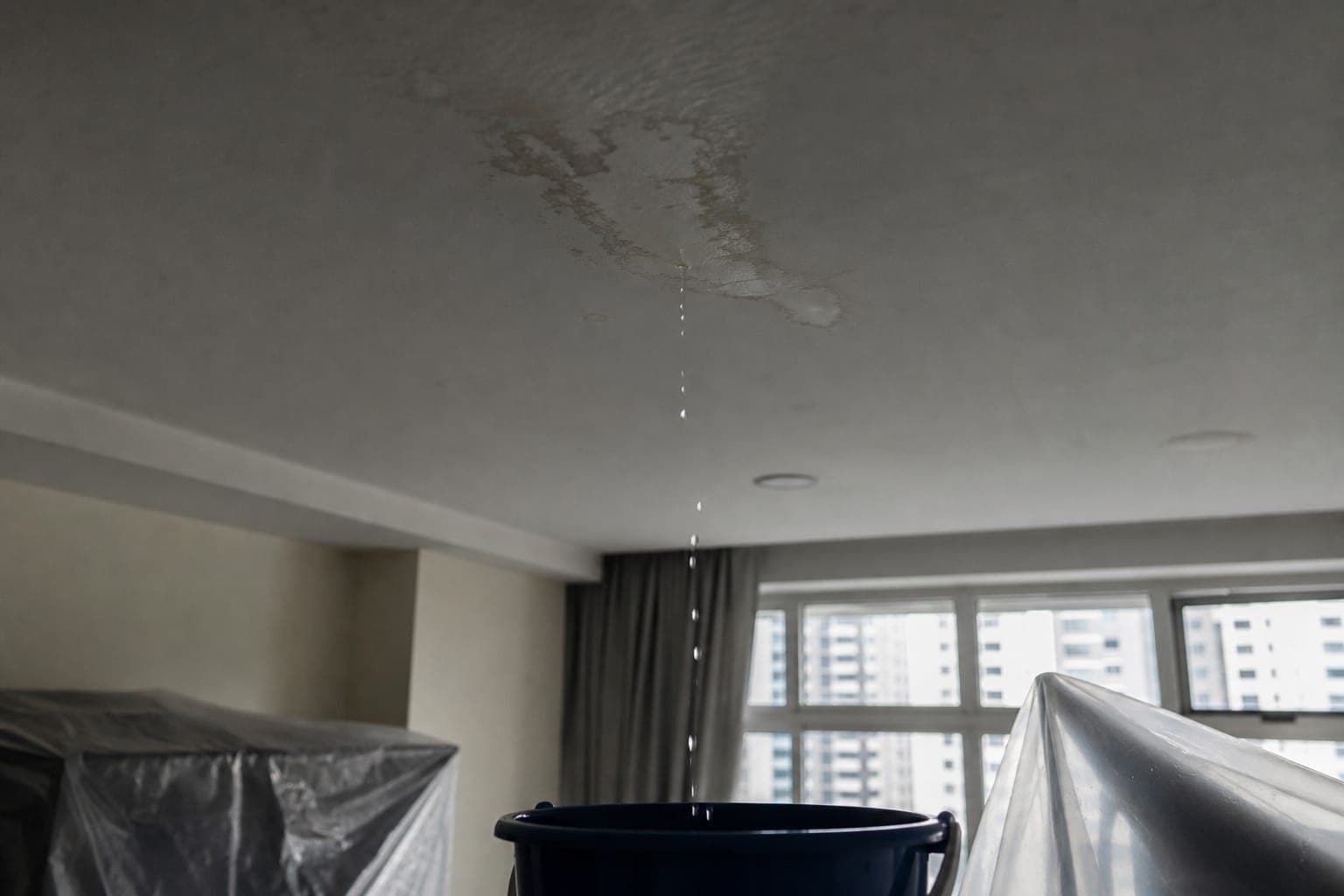
If water is coming through the ceiling rather than the wall, read our guide to a ceiling leak from the upstairs unit, which covers the inter-floor process in HDB flats and condos.
How long wall leakage repair takes
A pipe joint or window reseal can be done within hours. Replacing a concealed pipe section or treating structural cracks typically takes one to three days. If the cause is a neighbouring bathroom that needs re-waterproofing, allow about seven to ten days for that work, including curing and the ponding test. The final plaster and paint wait until the wall is dry, which is often the longest part.
What not to do
- Do not paint over damp. The paint will blister again, and the trapped moisture spreads.
- Do not rely on anti-mould paint alone. It treats the mould, not the water feeding it.
- Do not seal the inside face only and hope. The water will find another way out.
- Do not drill into a damp kitchen or bathroom wall without knowing where the pipes run.
If the wall also has cracks, our guide to wall crack repair explains how to tell a cosmetic crack from one that is letting water in.
Frequently asked questions
Can water seepage in a wall be fixed without hacking?
Sometimes. Window resealing, external crack sealing and some injection work need little or no hacking inside. A concealed pipe leak or failed bathroom waterproofing usually needs some opening up to repair properly.
How much does wall leakage repair cost?
It depends on the source and the access. Resealing a window is a small job; re-waterproofing the bathroom behind the wall is a large one. Our guide to water leakage repair cost explains what changes the price.
Is a damp wall dangerous?
Usually not structurally, but it damages finishes and carpentry, encourages mould, and can be a hazard if water is near sockets or wiring. Long-term damp in concrete can also contribute to rusting reinforcement and spalling.
Will waterproof paint stop seepage?
Not on its own if the source is still active. It can help as a final layer once the source is fixed and the wall has dried.
Bottom line
Wall leakage and water seepage are fixed at the source: a pipe, a wet area, an external wall or a window. Tell condensation from seepage first, trace where the water enters, repair that, let the wall dry, and only then replaster and paint. If you want the cause found and an itemised quote, WhatsApp us photos of the damp wall or arrange a free site visit through our water leakage repair page.
Need a contractor?
Get advice for your project
Send us your property type, photos, and preferred timeline. We'll recommend the next step and prepare a clear quotation.