On this page (8 sections)
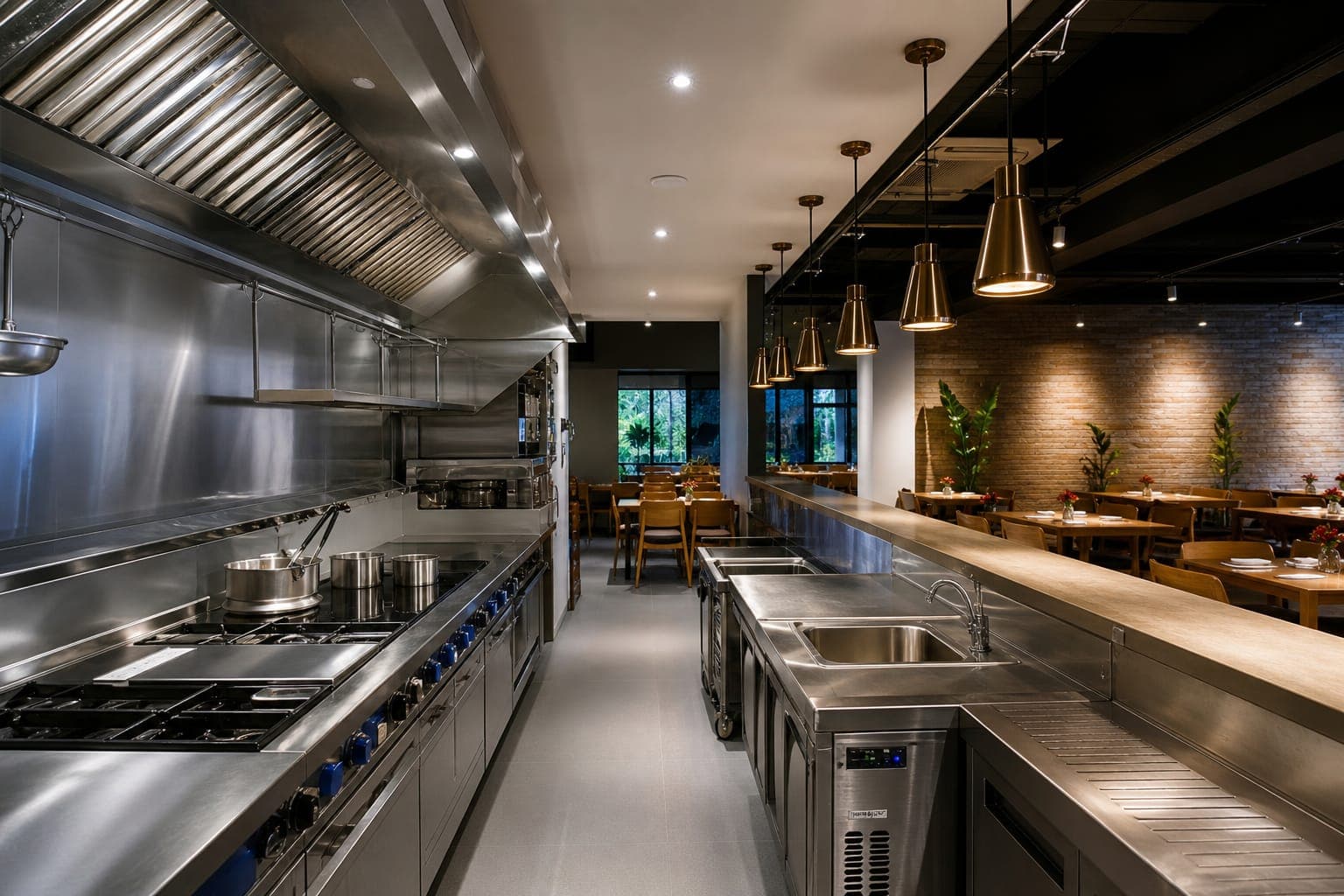
Restaurant and F&B fit-outs involve more compliance, services, and coordination than a typical retail renovation. If you are planning restaurant renovation Singapore work, the kitchen exhaust, plumbing, grease management, and licensing timeline often dictate the project schedule, not the dining room design.
Planning around M&E requirements early prevents costly rework after the hood and floor traps are installed.
F&B fit-out vs general commercial renovation
Restaurants need heavy-duty plumbing for kitchen sinks, floor traps, and grease interceptors. Ventilation and kitchen hood systems must meet fire and environmental requirements. Electrical loads for kitchen equipment far exceed office fit-outs. Flooring and wall finishes must handle grease, heat, and frequent cleaning.
A contractor experienced in F&B understands these constraints; a general office fit-out team often underestimates them.
Kitchen hood, ventilation, and fire requirements
The kitchen exhaust hood connects to ducting, fans, and often fire suppression systems. Duct routes affect ceiling height, neighbouring tenant agreements, and landlord approval. SCDF and building requirements apply depending on scale and cooking method.
Plan hood position and duct routing before finalising kitchen layout. Moving a hood after tiling is expensive.
Plumbing, grease traps, and wet areas
F&B plumbing must handle high-volume wastewater and grease. Grease interceptors or traps may be required, with access for maintenance. Floor gradients and drainage in kitchen areas prevent ponding and slip hazards.
Waterproofing at kitchen and toilet areas must be done properly: leaks in commercial tenancies create liability and business downtime.
Adex handles commercial renovation including F&B fit-outs, with supporting plumbing services, electrical services, and hacking and demolition.
Front-of-house and customer experience
Dining area design affects turnover and atmosphere: lighting, acoustics, seating layout, and bar placement all matter. But front-of-house works usually proceed after kitchen M&E rough-in is complete, so services do not damage finished surfaces.
Coordinate branding, signage, and furniture lead times with the construction schedule to avoid opening delays.
Licensing and approval timeline
NEA food shop licensing, fire safety, and landlord fit-out approvals run parallel to construction. Incomplete plumbing or ventilation documentation can delay licence issuance even if the dining room looks finished.
Build approval and inspection milestones into your project timeline from day one.
Managing downtime and phased works
If you are renovating an operating outlet, phased works reduce revenue loss but extend the timeline. Full closure allows faster completion but requires longer cash-flow planning. Night works may be restricted by building rules and cost more.
Decide your downtime tolerance before signing the fit-out contract.
What drives restaurant renovation cost
Kitchen M&E (hood, plumbing, electrical), grease management, tiling and durable finishes, carpentry for bar and counters, and front-of-house design all contribute. Structural changes, duct routing through multiple floors, and landlord-specified upgrades add significantly.
Get itemised quotes that separate kitchen M&E from dining fit-out so you can compare contractors fairly.
Bottom line
Restaurant renovation in Singapore depends on getting kitchen services right first: hood, plumbing, grease management, and electrical loads set the timeline. Plan approvals alongside construction, sequence kitchen M&E before front-of-house finishes, and work with a contractor who understands F&B compliance. That is how you open on time with a kitchen that actually works under service pressure.
Need a contractor?
Get advice for your project
Send us your property type, photos, and preferred timeline. We'll recommend the next step and prepare a clear quotation.