On this page (7 sections)
Pre-handover deadlines do not wait for slow contractors. If you need pre-handover defect repair Singapore work completed before key collection, lease commencement, or a sale completion, the priority is fixing safety and functional issues first — then cosmetic snags — within a realistic timeline.
Developers, landlords, and buyers all face the same pressure: defects must be cleared before the next step in the transaction or move-in plan.
Common pre-handover defects
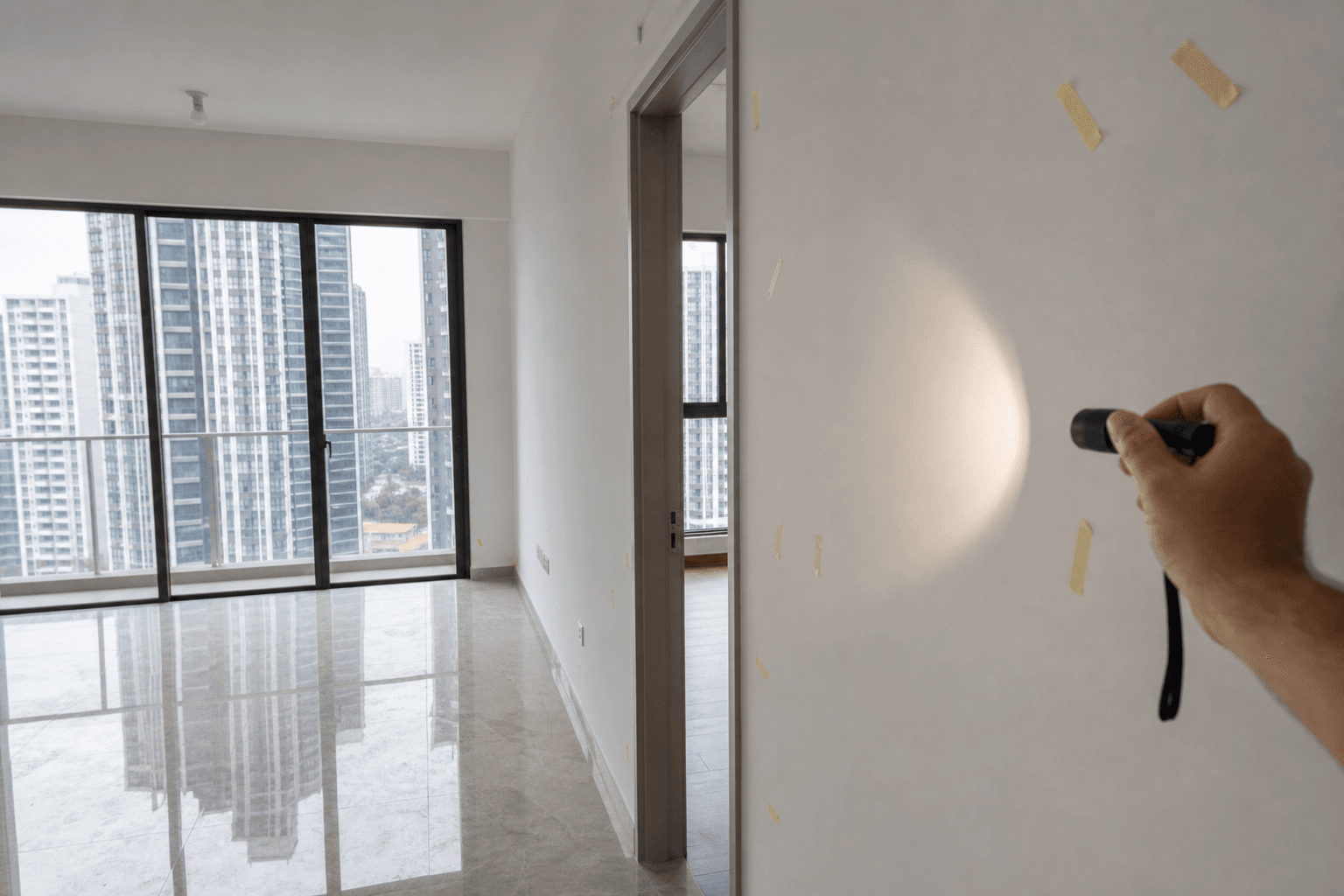
Typical snags include paint inconsistencies and touch-up marks, uneven or hollow-sounding tiles, cabinet alignment and door gaps, silicone and grouting defects at wet areas, scratched flooring or countertops, faulty door locks and handles, incomplete electrical points or switches, and minor ceiling cracks or patch marks.
Waterproofing failures and active leaks are not snags — they are urgent repairs that must be resolved before handover, not patched cosmetically.
Prioritise safety and function first
Before cosmetic touch-ups, address anything that affects safety or usability: active leaks, exposed wiring, non-functioning plumbing, insecure fixtures, and structural cracks with movement. These items can delay handover certificates, void warranties, or create liability for landlords.
Cosmetic paint and alignment issues can run in parallel once critical repairs are underway — but leaks and electrical faults always come first.
Developer defects vs renovation contractor snags
Know who is responsible for what. Developer defects (within the defects liability period) usually cover original construction quality — tile hollowness, window alignment, pipe leaks from original installation. Renovation contractor snags cover workmanship from your fit-out — carpentry gaps, paint overspray, incomplete sealing.
Mixing the two causes delays. Document each item with photos, location, and responsible party before scheduling repairs.
Adex provides pre-handover defect repair alongside water leakage repair, ceiling repair, painting services, and carpentry services.
How to prepare for a fast rectification
Provide a consolidated snag list with photos, floor plan markings, and priority ranking. Group items by trade — painting, tiling, carpentry, plumbing — so contractors can schedule efficiently. Confirm access hours, especially in condos with MCST working-hour rules.
The clearer your list, the faster a contractor can quote and mobilise.
Realistic timelines
Minor touch-up works may take one to three days. Larger snag lists across multiple trades commonly need one to two weeks depending on scope and material lead times. Wet-area rework or carpentry replacement takes longer than paint touch-ups.
If your deadline is fixed, share it upfront and ask what scope is achievable — not every item may fit a three-day window.
When to escalate to the developer
For new BTO or private property within the defects liability period, structural issues, waterproofing failure, and major tile or window defects may belong to the developer's rectification team. Engage them in parallel with your own contractor for renovation-related snags.
Do not let developer delays block move-in planning — track both workstreams separately.
Bottom line
Pre-handover defect repair in Singapore succeeds when you prioritise leaks and safety, document snags clearly, and assign responsibility correctly. Engage a contractor who can mobilise quickly across multiple trades, and fix functional issues before cosmetic touch-ups. That is how you hit handover deadlines without carrying problems into your new space.
Need a contractor?
Get advice for your project
Send us your property type, photos, and preferred timeline. We'll recommend the next step and prepare a clear quotation.