On this page (7 sections)
HDB kitchens are compact, rule-bound, and heavily used — which makes planning a HDB kitchen renovation Singapore project different from a landed or condo kitchen upgrade. Pipe positions, gas supply, structural walls, and wet-area rules all limit what you can change without approval.
Getting the layout and services right before ordering carpentry saves money and avoids rework after the cabinets are installed.
HDB kitchen layout options
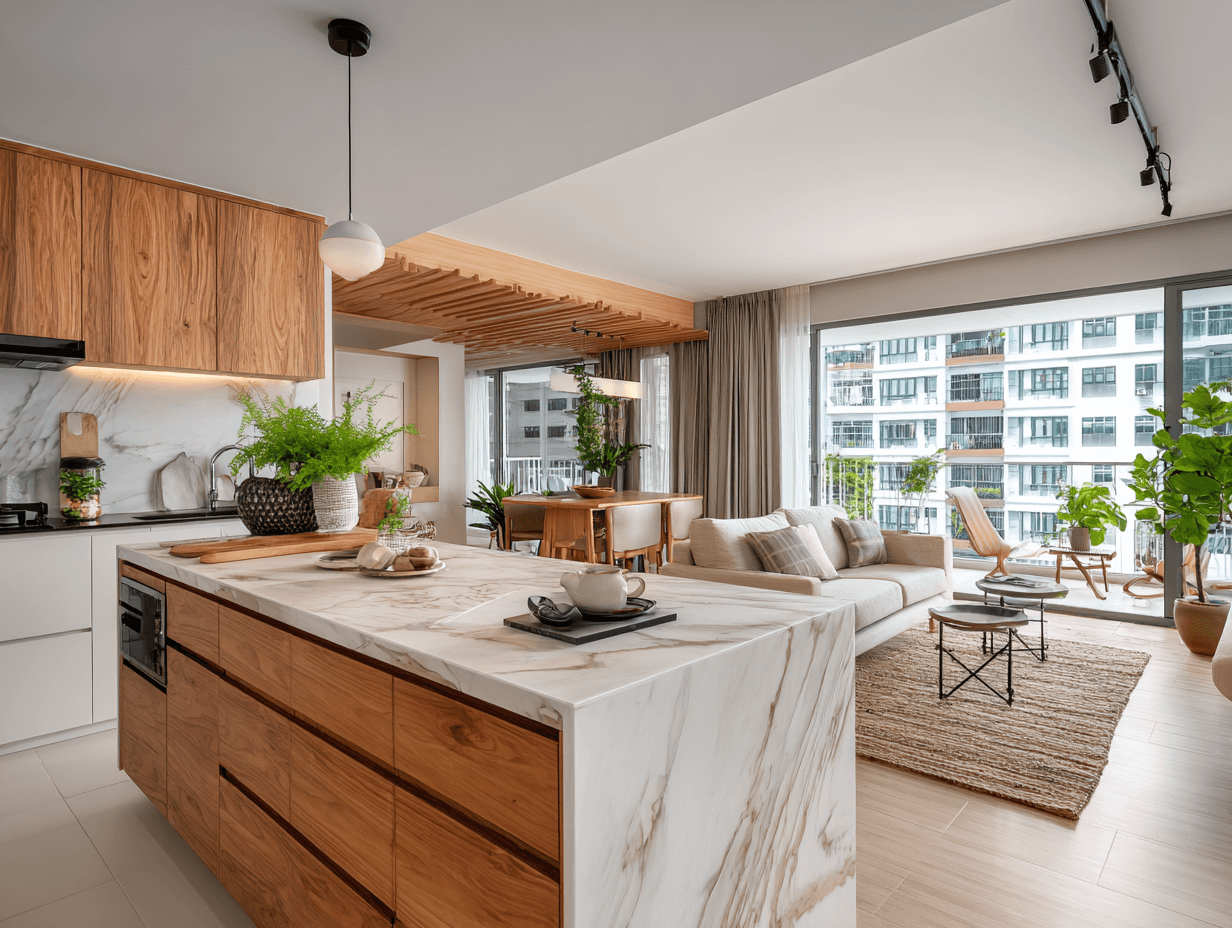
Most HDB kitchens are galley-style or L-shaped with fixed wet and dry zones. Open-kitchen concepts are popular but not always straightforward — removing partial walls may require HDB approval, and grease, noise, and ventilation become bigger issues when the kitchen opens into the living room.
Before committing to an open layout, confirm whether the wall is structural, whether your floor plan allows the change, and how you will vent cooking fumes effectively.
Rules and permits to know
HDB renovation guidelines cover hacking, wet-area changes, gas pipe relocation, and window or door replacements. Moving the sink or floor trap usually means waterproofing works and possible submission. Gas hob relocation must be handled by licensed gas contractors.
Your renovation contractor should know which changes can proceed under standard guidelines and which need formal approval before hacking starts.
Plumbing, gas, and electrical constraints
Kitchen renovation cost often rises when pipe runs, floor traps, or gas points need moving. In older flats, concealed pipe corrosion may only appear after hacking — budget contingency for pipe replacement if your flat is more than 20 years old.
Electrical load matters too. Adding ovens, induction hobs, dishwashers, and multiple small appliances may require new circuits or a sub-board upgrade. Plan power points around how you actually cook and store appliances.
Carpentry and material choices
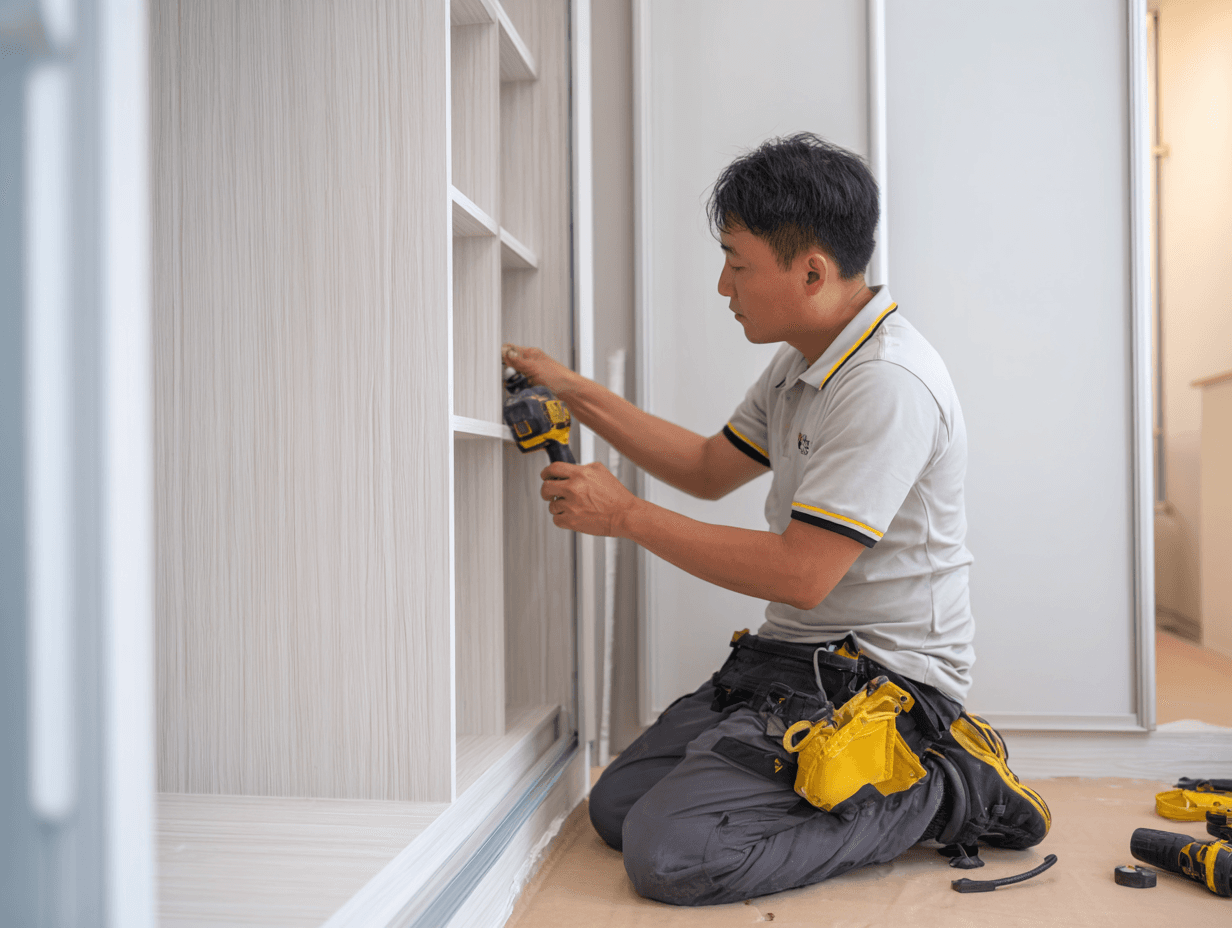
Kitchen carpentry is typically the largest line item. Cost drivers include laminate versus solid-surface or stone countertops, soft-close hardware, internal drawer systems, tall units, and whether you use top-and-bottom cabinets or floor-to-ceiling storage.
Choose materials for humidity and daily wear — HDB kitchens work hard, and cheap laminates at wet zones often fail within a few years.
Adex handles full home renovation, partial renovation, carpentry services, plumbing services, and electrical services for HDB kitchen projects.
Sequencing a kitchen renovation
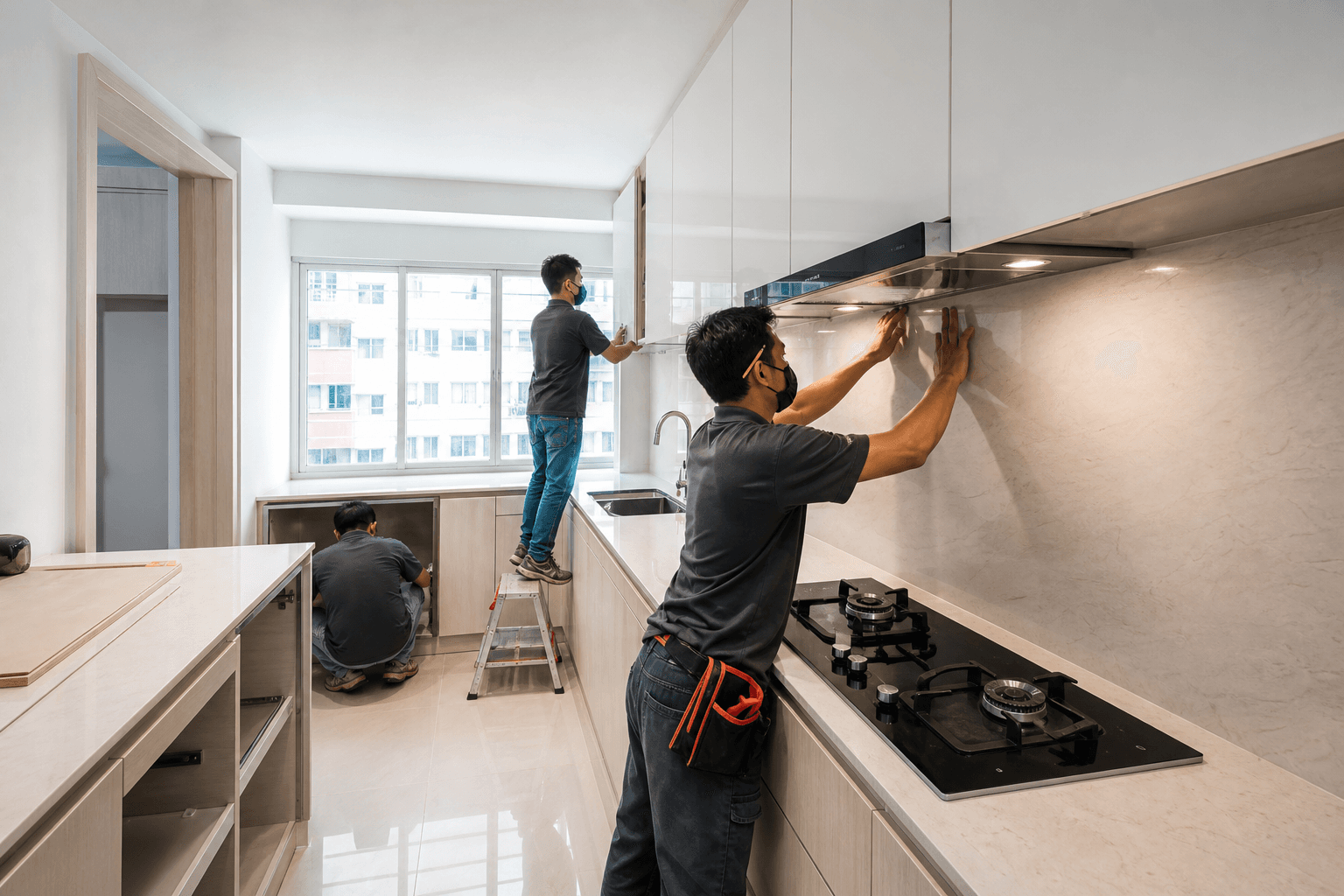
The typical sequence runs hacking and disposal, plumbing and gas rough-in, electrical works, waterproofing at wet zones if applicable, carpentry installation, countertop templating and installation, then tiling, painting, and appliance fitting.
Countertop measurement must happen after base cabinets are installed accurately — rushing this step causes gaps and rework.
What drives HDB kitchen renovation cost
Scope (cosmetic refresh versus full strip-out), pipe and gas relocation, carpentry volume and material grade, countertop choice, appliance provision, and whether you reconfigure layout all affect the final number. A cabinet-only refresh costs far less than moving the sink and opening the kitchen to the living room.
Lock your layout and specification before signing — mid-project changes in compact kitchens are expensive.
Bottom line
HDB kitchen renovation in Singapore works best when layout, services, and carpentry are planned as one package. Confirm HDB rules early, avoid moving pipes unless necessary, and invest in durable finishes at wet zones. A well-sequenced kitchen renovation makes daily cooking easier for years — not just on handover day.
Need a contractor?
Get advice for your project
Send us your property type, photos, and preferred timeline. We'll recommend the next step and prepare a clear quotation.