01
All Services
See the full service directory to compare renovation, repair, and trade-work options.
Explore pageExpert repair of concrete spalling caused by reinforcement corrosion, carbonation, or water damage. We restore structural integrity and prevent further deterioration.
Concrete spalling is a common issue in Singapore's humid climate. When reinforcing steel corrodes, it expands and causes the concrete cover to crack and fall off. Left untreated, spalling accelerates and compromises structural safety. Our professional repair process addresses both the symptoms and root cause.
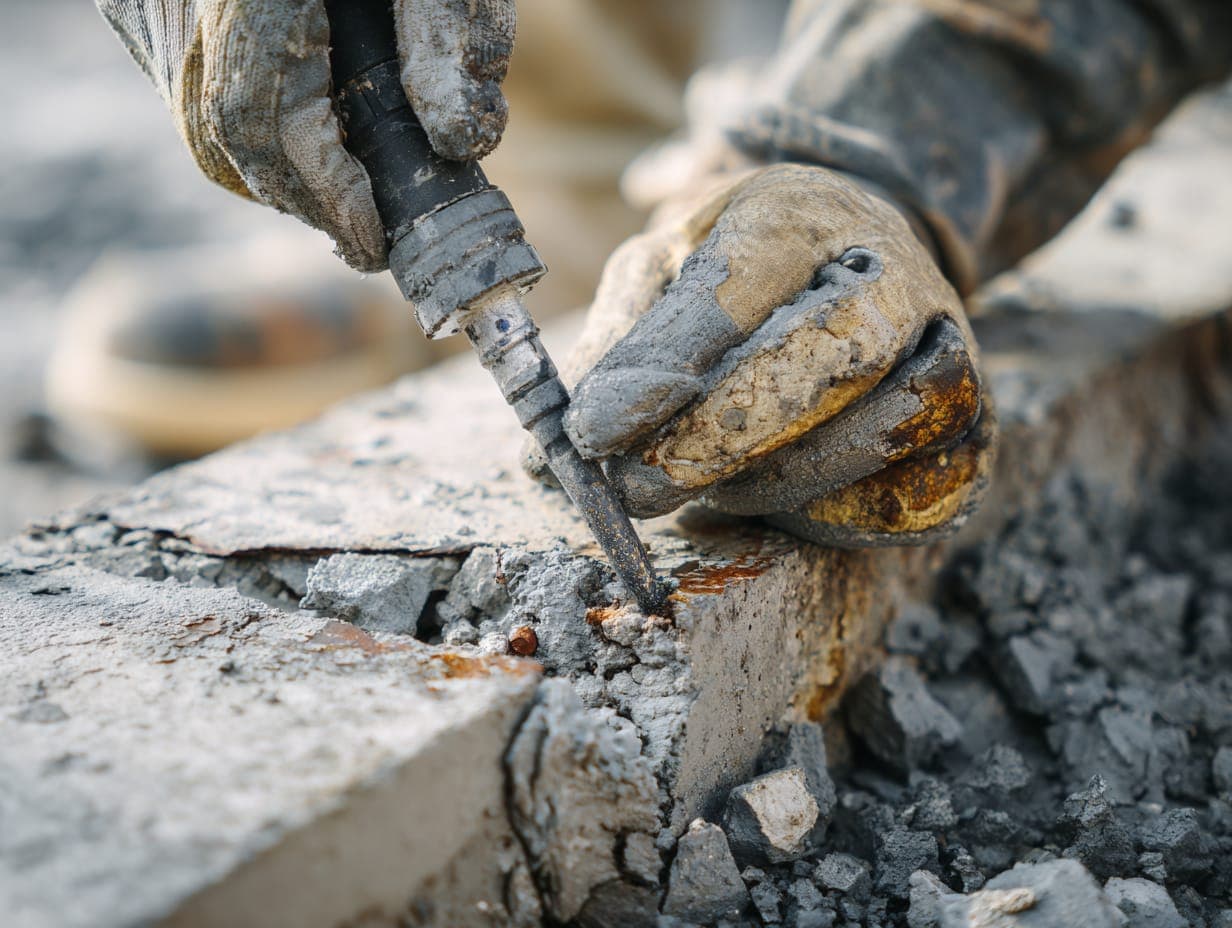
Thorough cleaning and treatment of corroded reinforcement with rust converter and protective coating.
High-strength repair mortar to restore concrete profile and cover.
Anti-carbonation coating to protect repaired areas and prevent recurrence.
Epoxy injection to seal cracks and restore structural bond.
Proper preparation including sound concrete exposure and bonding primer.
Color-matched finishing for a seamless appearance.
Concrete spalling is when pieces of concrete crack, bulge and break away from a ceiling, beam, column or wall. It almost always starts with the steel reinforcement inside. When that steel rusts, it expands to several times its original volume, and the pressure pushes off the concrete cover in front of it.
Signs to look for:
Not every crack is spalling. Fine plaster cracks without rust or bulging are usually a finish issue, covered under wall crack repair.
Fresh concrete is alkaline, which protects the steel from rusting. Over many years, carbon dioxide from the air reacts with the concrete and lowers that alkalinity from the surface inwards. Once the carbonated zone reaches the steel, the protection is gone and rust can start, especially where moisture is present.
Chlorides break down the protective layer around steel even in alkaline concrete. They can come from sea air in coastal areas, from contaminated materials in older construction, or from cleaning chemicals used over time.
Singapore's humidity, plus bathroom and kitchen steam, keeps concrete damp. A leak from the floor above makes it much worse, which is why spalling is so common on bathroom and kitchen ceilings. If a leak is feeding the area, it needs water leakage repair first, or the new patch will fail.
Where the concrete cover over the steel is thin, carbonation and moisture reach the steel sooner. Ageing HDB ceilings, particularly in bathrooms, kitchens and service yards of older flats, are where spalling shows up most often.
If the cause is a leak, the source is repaired first. Our guide to concrete spalling in HDB flats and condos explains the warning signs and how to tell spalling from ordinary cracks.
| Property | Who usually handles it |
|---|---|
| New HDB flat | Defects found during the defects liability period are reported to HDB for rectification. |
| Older HDB flat | Spalling repair is one of the essential works under the Home Improvement Programme for eligible flats, and HDB has offered repair assistance for spalling in older flats. Outside those, repairs inside the flat are generally the owner's responsibility. Check HDB's current scheme and eligibility before booking. |
| HDB common areas | Spalling in corridors, staircases and external walls is reported to the Town Council. |
| Condominium | The MCST generally handles common property such as external walls, corridors and the roof. Spalling inside a unit may be the owner's or shared, depending on the strata plan and by-laws. Ask the managing agent first. |
| Landed home | The owner is responsible. |
Where spalling has damaged a ceiling finish or false ceiling, we can handle the ceiling repair in the same visit. For beams, columns or widespread damage, see structural rectification.
Assess extent of spalling, test concrete strength, and identify affected areas.
Remove loose and unsound concrete to expose clean substrate.
Clean corroded reinforcement and apply rust converter and protective primer.
Apply bonding agent for proper adhesion of repair material.
Apply polymer-modified repair mortar in layers to required profile.
Apply anti-carbonation coating for long-term protection.
Concrete spalling is primarily caused by corrosion of embedded reinforcement steel. Contributing factors include water ingress, carbonation, chloride contamination, and inadequate concrete cover.
Yes, spalling can be dangerous. Falling concrete pieces pose immediate hazard, and continued deterioration weakens structural elements. Repair should not be delayed.
Properly executed spalling repairs with quality materials typically last 15-20 years or more, especially with protective coating application.
Yes, we handle projects of all sizes from single areas to building-wide repairs. Large projects may require PE endorsement which we can arrange.
It depends on the flat and the scheme in force. Defects in a new flat are covered during the defects liability period, spalling repair is part of the essential works under the Home Improvement Programme for eligible older flats, and HDB has offered repair assistance for spalling in older flats. After that, repairs inside the flat are generally the owner's responsibility. Check HDB's current scheme for your flat before booking.
No. Plaster or skim coat over rusting steel traps the corrosion, and the steel keeps expanding until the patch cracks and falls again. The loose concrete has to be removed and the steel treated first.
Compare this service with related options, review our process, browse recent work, or reach out for a quotation.
See the full service directory to compare renovation, repair, and trade-work options.
Explore pageUnderstand our consultation, planning, build, and handover process before you enquire.
Explore pageBrowse completed project photos and videos across residential and commercial spaces.
Explore pageTell us about your project and get a clear recommendation with transparent pricing.
Explore pageTell us about your space and we'll respond with a clear plan and a transparent quote.